10 Emerging Technology Trends to Watch in 2026

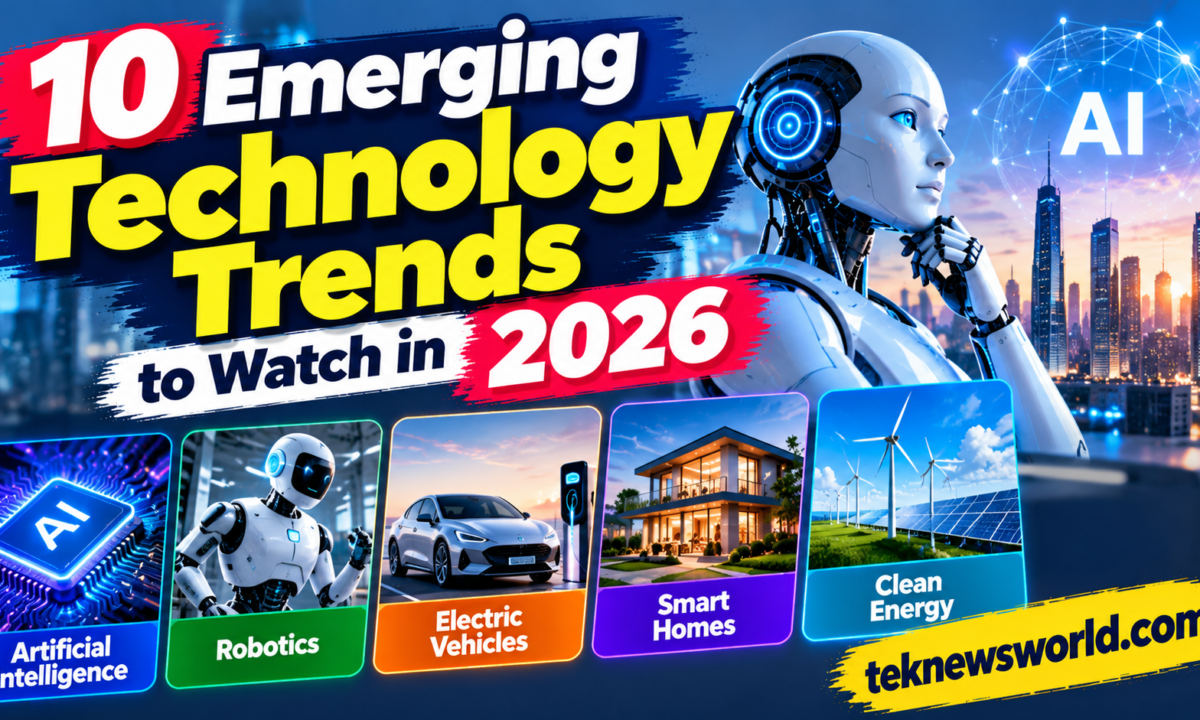
Technology continues to reshape how people work, communicate, travel, shop, and manage information. In 2026, businesses and consumers are paying attention to developments in artificial intelligence, cybersecurity, robotics, connected devices, and energy-efficient computing.
Not every new technology will become mainstream immediately. Some are already widely used, while others are still developing or expanding into new industries. Understanding these trends can help readers make informed decisions about technology, careers, and digital investments.
1. Artificial Intelligence Becomes More Practical
AI is moving beyond simple chatbots and content generation. Many organizations are exploring systems that can help complete multistep tasks, search internal information, summarize documents, and assist with business workflows.
The key question is how reliably these systems perform in real situations. Accuracy, data privacy, operating costs, and human oversight will influence where AI delivers the most value.
2. AI Agents and Workflow Automation
AI agents are designed to work toward a goal by performing a sequence of actions within a defined environment. For example, a business may test an agent that gathers information, prepares a report, and requests approval before taking the next step.
These tools can reduce repetitive work, but access controls and human approval are important when actions involve payments, customer records, or other sensitive operations.
3. Cybersecurity and Digital Identity
As more activities move online, protecting digital identities and business systems remains essential.
Organizations are strengthening account security, monitoring suspicious activity, and improving identity verification. Individuals can also take practical steps by using unique passwords, enabling multifactor authentication, and checking unexpected requests before responding.
4. Robotics in Industry and Everyday Services
Robots are used in manufacturing, warehouses, agriculture, healthcare support, and other specialized environments. Improvements in sensors, software, and AI may allow some robots to handle a wider variety of tasks.
However, real-world performance depends on safety, cost, maintenance, and the environment in which a robot operates. Broad adoption will likely vary by industry.
5. Edge Computing and Faster Data Processing
Edge computing processes some information near the device or location where it is generated instead of sending everything to a distant data center.
This can help applications that need quick responses or must operate with limited connectivity. Examples include industrial monitoring, connected equipment, and certain camera systems.
Edge computing does not eliminate cloud services; many systems combine local processing with cloud infrastructure.
6. Connected Devices and the Internet of Things
Smart devices can collect and exchange information to help monitor equipment, manage buildings, track environmental conditions, and automate selected tasks.
As the number of connected devices grows, security and long-term software support become important considerations. Consumers should check update policies, privacy settings, and whether a device can continue working if a cloud service changes.
7. Advances in Semiconductor Technology
Semiconductors power smartphones, computers, vehicles, data centers, and many connected devices. Manufacturers continue working on chip performance, energy efficiency, packaging, and specialized processors for AI workloads.
Progress depends on manufacturing capabilities, supply chains, investment, and technical challenges. New chips can improve performance, but actual benefits vary by device and application.
8. Clean Energy and Smarter Electricity Systems
Digital technology is increasingly used to monitor energy demand, manage electricity networks, and coordinate renewable energy resources and storage.
Smart meters, forecasting tools, and grid-management systems can help operators make better use of available resources. Results depend on infrastructure, regulation, investment, and local energy conditions.
9. Extended Reality and Spatial Computing
Augmented reality, virtual reality, and related spatial-computing technologies can combine digital content with physical environments or create immersive virtual spaces.
Potential applications include training, design, education, visualization, and entertainment. Comfort, hardware cost, useful content, and privacy will influence how widely these tools are adopted.
10. Quantum Computing Research
Quantum computing uses principles of quantum physics to process information in ways that differ from conventional computing.
Researchers are exploring potential applications in areas such as chemistry, materials science, and specialized optimization problems. The technology still faces significant engineering and error-correction challenges, and it is not a general replacement for ordinary computers.
Which Technology Trends Matter Most to You?
Different trends matter to different readers:
- Students and job seekers: AI literacy, cybersecurity, and semiconductor technology.
- Small businesses: AI automation, digital identity protection, and connected systems.
- Technology professionals: Cloud and edge computing, AI infrastructure, and robotics.
- Consumers: Connected-device security, privacy, and practical AI features.
- Energy-conscious readers: Smart grids, storage, and digital energy management.
How to Follow Technology Trends Without Getting Misled
Technology news often includes predictions and promotional claims. To assess a development, check whether the technology is available now, being tested in a pilot, or still in research.
Look for independent testing, clear performance measures, credible sources, and details about cost and limitations. A demonstration does not necessarily prove that a product is ready for widespread use.
Conclusion
AI, cybersecurity, robotics, connected devices, advanced semiconductors, and clean-energy systems are important areas to watch in 2026. Their impact will depend on practical performance, affordability, security, and how responsibly they are adopted.
Following credible reporting and understanding the difference between proven applications and future predictions can help readers stay informed without being distracted by hype.
Editorial note: Technology adoption varies across countries, industries, and products. Verify specific launch dates, specifications, and availability with official announcements and independent reporting.

Thalla Lokesh is a technology writer and digital marketer passionate about sharing the latest updates in technology, AI, gadgets, cybersecurity, software, and digital trends. With experience in SEO and online marketing, he creates informative and easy-to-understand content that helps readers stay updated in the fast-changing tech world.